
Disclosure: This review may contain affiliate links. As an Walmart creator, I earn from qualifying purchases—at no extra cost to you.

📌 Introduction
For home coffee enthusiasts who want café-style drinks without dedicating a full countertop to a bulky machine, compact espresso makers offer a practical middle ground. The this monitor is positioned as a semi-automatic option for those who want control over their brew while keeping the footprint small. This analysis examines the confirmed specifications, feature set, and practical considerations for buyers evaluating this model in 2026.
Built around a 20-bar Italian pump and a 1350-watt boiler, this machine targets users who want genuine espresso extraction rather than pod-based convenience. With a brushed stainless steel body, a removable 34 oz water tank, and a steam wand for milk texturing, the CM5418 aims to cover the full range of espresso-based drinks. Below, we break down what the listing confirms, what buyers should verify, and who this machine is best suited for.
📊 Quick Specifications Table
✨ Key Features
20-Bar Pressure System
The listing confirms a 20-bar professional Italian pump paired with a 1350-watt boiler. While the pump is rated at 20 bar, the description notes that optimal extraction occurs at 9 bar, which is the standard pressure range for espresso. This distinction matters: the higher pump rating provides headroom, but the actual extraction pressure is what influences crema and flavor balance. The built-in pressure gauge gives visual feedback, allowing users to monitor and adjust their grind, tamp, and flow during the shot.
Visual Pressure Feedback
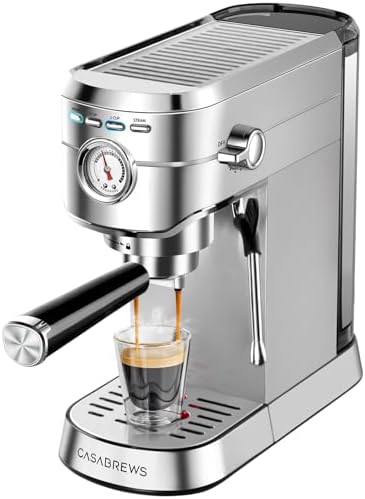
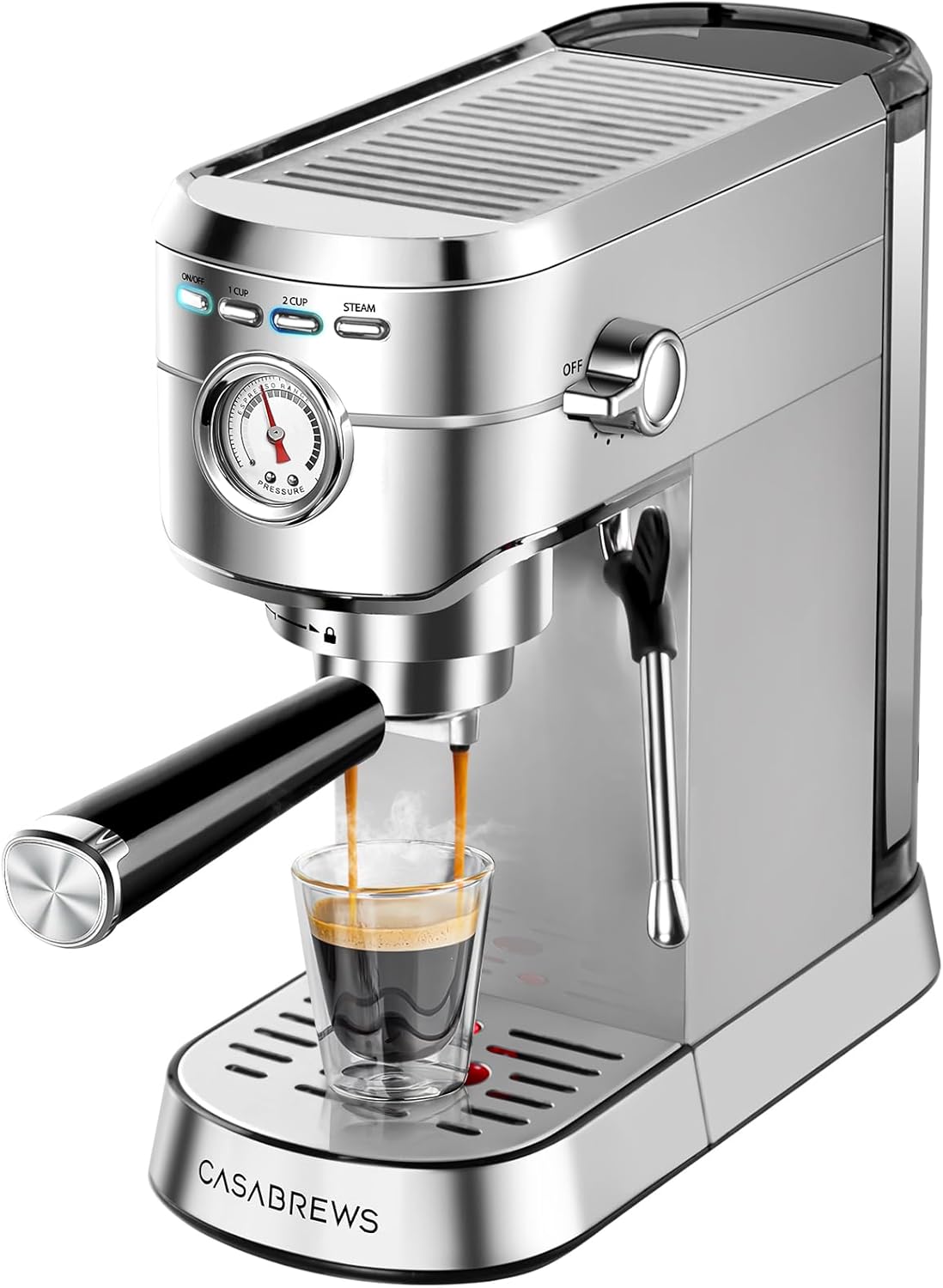
One of the more distinctive features confirmed in the listing is the pressure gauge. This is not a common inclusion at this machine’s size and price tier. The gauge allows the user to see extraction pressure in real time, which is useful for learning how grind size, dose, and tamping pressure affect the final shot. For beginners, this turns the machine into a learning tool; for more experienced users, it offers a way to dial in consistency.
Gentle Pre-Infusion
The listing describes a pre-infusion stage that wets the coffee grounds at low pressure before full extraction begins. This process is intended to improve extraction balance and flavor depth by saturating the grounds evenly. While the listing does not specify the exact duration or pressure of the pre-infusion phase, the presence of this feature suggests attention to extraction quality beyond simple high-pressure brewing.
Milk Frothing Steam Wand
The steam wand is confirmed as a core feature, designed to produce microfoam for lattes, cappuccinos, and other milk-based drinks. The listing emphasizes the wand’s ability to create smooth, creamy foam suitable for latte art. The included instructional guidance recommends using cold whole milk and positioning the wand just below the milk surface at a 30–60 degree angle for optimal frothing results.
Adjustable Shot Volume
Users can select between single and double shot volumes, allowing for customization of brew strength. The machine includes both a 1-cup and a 2-cup filter basket, and the listing provides guidance on coffee dosing: 7–9 grams for a single cup and 13–15 grams for a double cup. This level of control is typical for semi-automatic machines, where the user manages the dose and the machine manages the extraction.
Removable 34 oz Water Tank
The water tank holds 34 ounces, which the listing states is enough for up to 10 cups before refilling. The tank is detachable, making it easier to fill and clean. This is a practical feature for users who make multiple drinks throughout the day or who prefer not to refill the tank constantly.
Removable Drip Tray
The stainless steel drip tray is removable and designed to accommodate tall mugs. This is a small but meaningful detail for users who drink from larger cups or travel mugs and do not want to remove the tray to fit their glassware underneath the portafilter.
Top Cup-Warming Tray
The top of the machine serves as a warming tray for cups. The listing notes that this helps keep espresso hotter and preserves flavor. While this is a passive feature, it is a thoughtful addition for those who want their cups pre-warmed before pulling a shot.
🎨 Design and Build Considerations
The CM5418 uses a brushed stainless steel exterior, which gives it a durable and relatively premium appearance compared to plastic-bodied machines. The dimensions are 12.28 inches deep, 5.47 inches wide, and 11.97 inches tall, making it a genuinely compact unit that should fit on most kitchen counters without dominating the space. The slim profile is one of the machine’s key selling points, especially for apartments, small kitchens, or office break rooms.
The listing describes the design as suitable for “any size kitchen,” and the compact footprint supports that claim. The included components—portafilter, tamper with spoon, two filter baskets, and a recipe booklet—cover the essentials needed to start brewing immediately. The tamper with an integrated spoon is a space-saving design choice that reduces the number of separate tools required.
One design consideration to note is the machine’s weight. At 8.6 pounds, it is substantial enough to stay stable during use but light enough to move or store if needed. The brushed stainless steel finish is practical for resisting fingerprints and smudges, though buyers should be aware that stainless steel can still show water spots if not wiped down regularly.
⚡ Performance Expectations
Because this is a semi-automatic machine, performance depends heavily on user technique. The machine provides the pressure and temperature, but the user controls grind size, dose, and tamping pressure. The listing offers specific troubleshooting guidance that reveals the machine’s operating parameters:
Check latest price and availability on Walmart
- For slow brewing, the listing recommends coarser grounds, reduced dose (7–9g single, 13–15g double), and Italian-style coffee beans.
- For low pressure, the guidance suggests a finer grind, more coffee in the filter, or increased tamping pressure.
- For overheating protection, the machine may flash the 1-cup and 2-cup lights and refuse to brew; the fix is to run hot water through the steam wand for 20 seconds to cool the boiler.

These details indicate that the machine has built-in safety protections and that the user has meaningful control over extraction quality. The pressure gauge is the primary tool for monitoring and adjusting performance. The listing states that optimal extraction occurs at 9 bar, which is the industry standard for espresso, and the gauge allows users to see whether they are in that range.
It is important to note that the 20-bar pump rating does not mean the machine brews at 20 bar. The pump is capable of generating that pressure, but the actual extraction pressure is regulated by the resistance of the coffee puck. The 9-bar figure cited in the description is the target for balanced extraction. Buyers should understand this distinction to set realistic expectations.
The steam wand performance is described as capable of producing microfoam for latte art. The listing includes specific frothing guidance: use cold whole milk, position the wand just below the surface at a 30–60 degree angle, and avoid submerging the wand too deeply. This suggests the wand is powerful enough for texturing milk but requires technique to achieve the best results.
⚖️ Pros and Cons
Pros
- Compact footprint suitable for small kitchens, offices, or limited counter space
- Built-in pressure gauge provides visual feedback for dialing in shots
- 20-bar pump with confirmed 9-bar optimal extraction target
- Pre-infusion stage for more balanced extraction
- Steam wand capable of producing microfoam for milk-based drinks
- Removable 34 oz water tank for easy refilling and cleaning
- Removable drip tray accommodates tall mugs
- Includes essential accessories: portafilter, tamper, two filter baskets
- Brushed stainless steel construction for durability and appearance
- 1-year warranty with U.S.-based support
Cons
- Semi-automatic operation requires learning curve for grind, dose, and tamp
- No built-in grinder; users must purchase ground coffee or a separate grinder
- Cannot brew immediately after steaming milk; must wait for boiler to cool
- Overheating protection can trigger if used too aggressively
- Limited to ground coffee input; no pod or capsule compatibility
- Single boiler design means switching between brewing and steaming requires waiting
🆚 Comparison with Similar Products
In the compact semi-automatic espresso machine category, the CM5418 sits between entry-level manual machines and more expensive dual-boiler or heat-exchange models. The key differentiators for this machine are the built-in pressure gauge and the compact footprint.
Compared to fully automatic machines, this model requires more involvement. Users must grind (or purchase ground coffee), dose, tamp, and monitor extraction pressure. The trade-off is greater control over the final shot and a lower price point than fully automatic options. For buyers who enjoy the ritual of espresso-making and want to learn the craft, this is a reasonable choice.
Compared to pod-based systems, this machine offers fresher coffee and more customization, but with more cleanup and a steeper learning curve. Pod machines are faster and more convenient, but they limit the user to proprietary capsules and offer less control over extraction quality.
Compared to larger semi-automatic machines, the CM5418 gives up some features—such as a built-in grinder, larger boiler capacity, or PID temperature control—in exchange for a smaller footprint and lower price. Buyers who already own a grinder and want a compact second machine or a first machine for learning may find this balance appealing.
The 34 oz water tank is smaller than what many full-size machines offer, but the listing states it is sufficient for up to 10 cups. For households that brew multiple drinks in a row, the removable tank makes refilling quick and convenient.
🛒 Buying Guide
When evaluating the CM5418, consider the following factors based on your needs and setup:
Grinder availability: This machine requires ground coffee. If you do not already own a burr grinder, factor that cost into your budget. Pre-ground coffee will work, but freshly ground beans will produce noticeably better results, especially given the machine’s pressure gauge and pre-infusion features.
Learning commitment: Semi-automatic machines reward patience. The pressure gauge helps, but you will still need to experiment with grind size, dose, and tamping pressure to achieve consistent shots. If you prefer push-button convenience, a fully automatic or pod machine may be a better fit.
Milk-based drinks: If you primarily drink lattes or cappuccinos, the steam wand is a critical feature. The listing confirms the wand can produce microfoam, but the single-boiler design means you cannot brew and steam simultaneously. You will need to brew your shot first, then steam milk, and wait for the boiler to cool between functions.
Counter space: The dimensions are 12.28″D x 5.47″W x 11.97″H. Measure your available counter space to confirm this footprint works for your kitchen. The slim width is a particular advantage for narrow counters.
Usage volume: The 34 oz tank supports up to 10 cups per fill, but the boiler will need time to recover between shots and between brewing and steaming. For occasional use or 1–2 drinks per day, this is not a concern. For frequent back-to-back drinks, consider whether the recovery time will be acceptable.
✅ Key Things to Verify Before Buying
Before purchasing, review the Walmart listing to confirm the following details, as they can affect your experience:
- Exact included accessories: The listing confirms the machine, water tank, two filter baskets, portafilter, tamper with spoon, manual, and recipe booklet. Verify the current listing includes all of these before ordering.
- Warranty terms: The listing states a 1-year warranty. Confirm the warranty coverage and the process for contacting CASABREWS support if issues arise.</li
Check latest price and availability on Walmart